
Looking After a New Asphalt Driveway
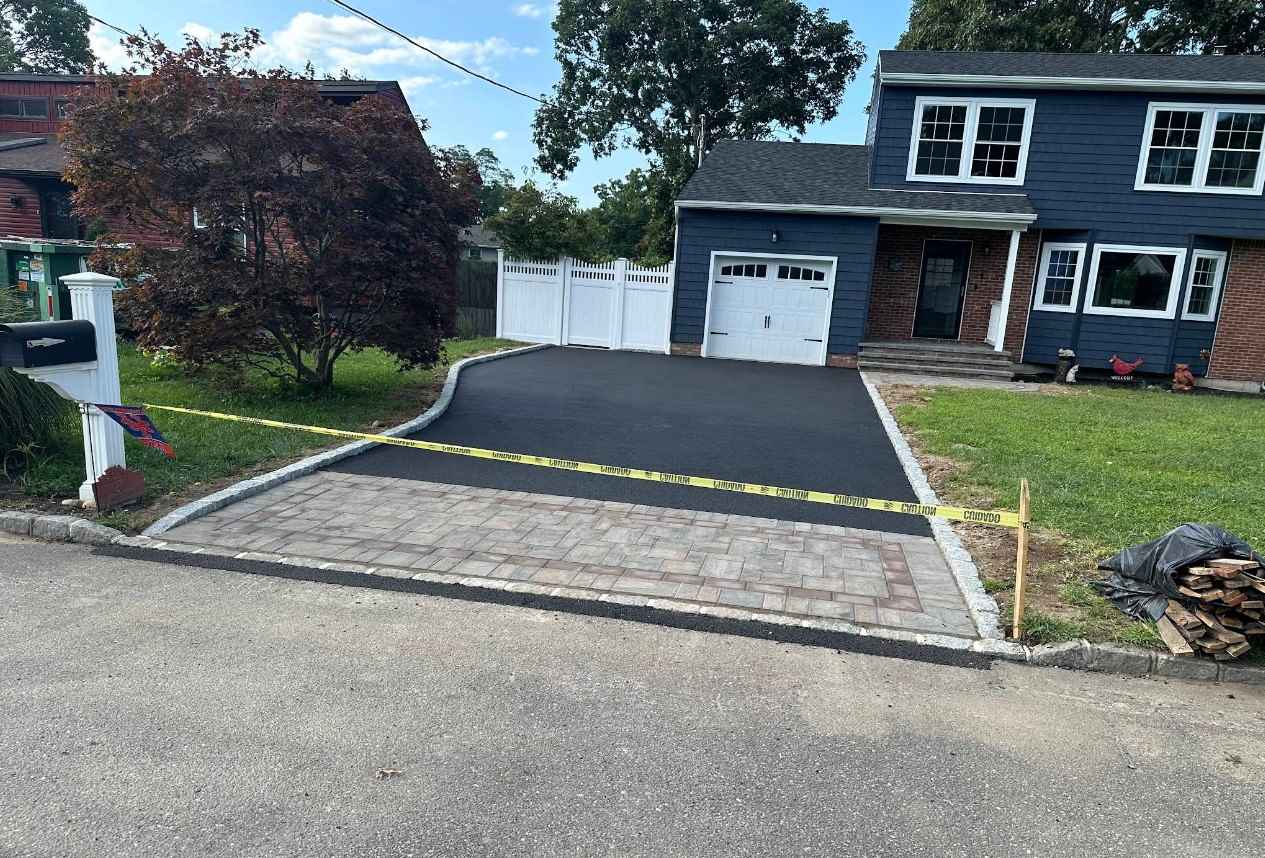
A well-built asphalt driveway needs very little from you. But the first year matters more than the ten after it, and there’s an industry built on selling you a treatment you don’t need yet.
Here’s what to do, when, and what to ignore.
The first 48 hours
Walk on it the same day. Fine.
Keep vehicles off for about 48 hours in warm weather, longer if it’s cool. Asphalt is laid hot and gains its strength as it cools; driving on it before it’s cooled through leaves marks you can’t undo.
Keep the edges clear. The shoulders are the most vulnerable part of any driveway and they’re at their most vulnerable now.
The first summer
New asphalt stays soft for months while it cures, and this is when almost all avoidable damage happens.
Don’t turn the wheel while stationary. Power steering on a parked car twists the surface and leaves a scuff mark that’s permanent. Roll slightly as you turn. It’s a habit worth acquiring for the first season.
Put a board under point loads. Motorcycle stands, trailer jacks, ladder feet, car ramps. A small metal foot carrying serious weight will press into warm new asphalt. A scrap of plywood solves it entirely.
Expect it to be soft in a heatwave. Tyre marks in July on a driveway laid in May are normal and largely cosmetic. It firms up as it cures.
Keep heavy vehicles off it. A skip lorry, a concrete truck or a moving van on a new residential driveway can do in one visit what years of cars won’t. If you’ve got a delivery coming, say so before it arrives.
Fuel and oil are the real enemy. Petrol, diesel and engine oil dissolve the binder that holds asphalt together. A drip is nothing; a persistent leak will soften a patch right through. Clean spills promptly and fix the leak.
Sealcoating: when, and how often
This is the section people come here for.
Not immediately. A new driveway needs to cure before it’s sealed at all: sealing too early traps volatiles in the surface and does more harm than good. A contractor who knocks on your door offering to seal a driveway laid last month is selling you something, and the fact that they’re driving around with leftover material is itself the oldest warning sign in the trade.
Then, on a sensible cycle. Sealer protects the binder from UV and oxidation, which is a real mechanism. It’s what turns asphalt grey and brittle over years. Applied at a reasonable interval, it genuinely extends surface life.
But over-sealing is a real problem and it is far more common than under-sealing. Repeated coats build up a thick sealer layer that becomes brittle independently of the asphalt underneath. It then cracks on its own: a fine crazed pattern across the surface that looks like the driveway is failing when it’s actually the coating. Stripping that back off is an unpleasant job.
The flyers through your door suggest an interval considerably shorter than the material needs.
Winter
De-icing salt is harder on concrete than on asphalt, so an asphalt driveway is relatively forgiving here. Sand gives you traction with no chemical effect at all.
Snow ploughing is where damage happens. A steel blade dragged hard across asphalt catches the surface, and it catches the edges worst. Ask whoever clears your drive to run the blade slightly raised, or with shoes fitted. Mark the edges with stakes before the first snow so the plough operator can see where the driveway stops. Most edge damage is someone not being able to see the boundary.
Piled snow against the shoulder means meltwater soaking the edge support. Pile it on the lawn where you can.
Cracks: which ones matter
Hairline surface cracks. Age and UV. Sealing addresses these.
Cracks wider than a pencil. Water is getting to the base. Worth filling before winter, because water in a crack that then freezes widens it every cycle.
A crack in the same place every spring. Frost heave: water held in the ground underneath, freezing and lifting. Filling it treats the crack and does nothing about the cause. This is the north-shore pattern, on moraine ground in Huntington, Commack, Setauket, Miller Place and Port Jefferson.
Alligator cracking: an interconnected pattern like scales. That’s base failure showing through the surface, and it means the driveway is done in that area. Sealing it, filling it or overlaying it will all fail in the same place.
A dished area where cars park. Settlement into an under-compacted base. The south-shore pattern on free-draining outwash sand.
Resurfacing or replacement? → · How long an asphalt driveway lasts →
The knock at the door
It’s worth saying plainly because it still catches people every season.
Someone arrives unannounced with “material left over from a job down the road,” offers a price well below market, wants cash, and needs a decision today. What gets laid is a thin skim over whatever was there, and it looks acceptable for a few months.
Nobody with leftover hot asphalt is driving around looking for a driveway. The material has a working temperature window measured in hours.
If you want your driveway assessed, ring someone with an address.
Not sure what you’re looking at?
Send a photograph of the crack, the dip or the patch you’re worried about. We’ll tell you whether it needs doing now, needs watching, or is cosmetic: including when the answer is that it’ll hold another five years.
Get in touch → · Call (631) 245-9273
Related
Asphalt driveway paving in Medford · Resurfacing vs. replacement · Driveway lifespan · Oil and stone chip seal