
Eleven Questions to Ask Before You Sign
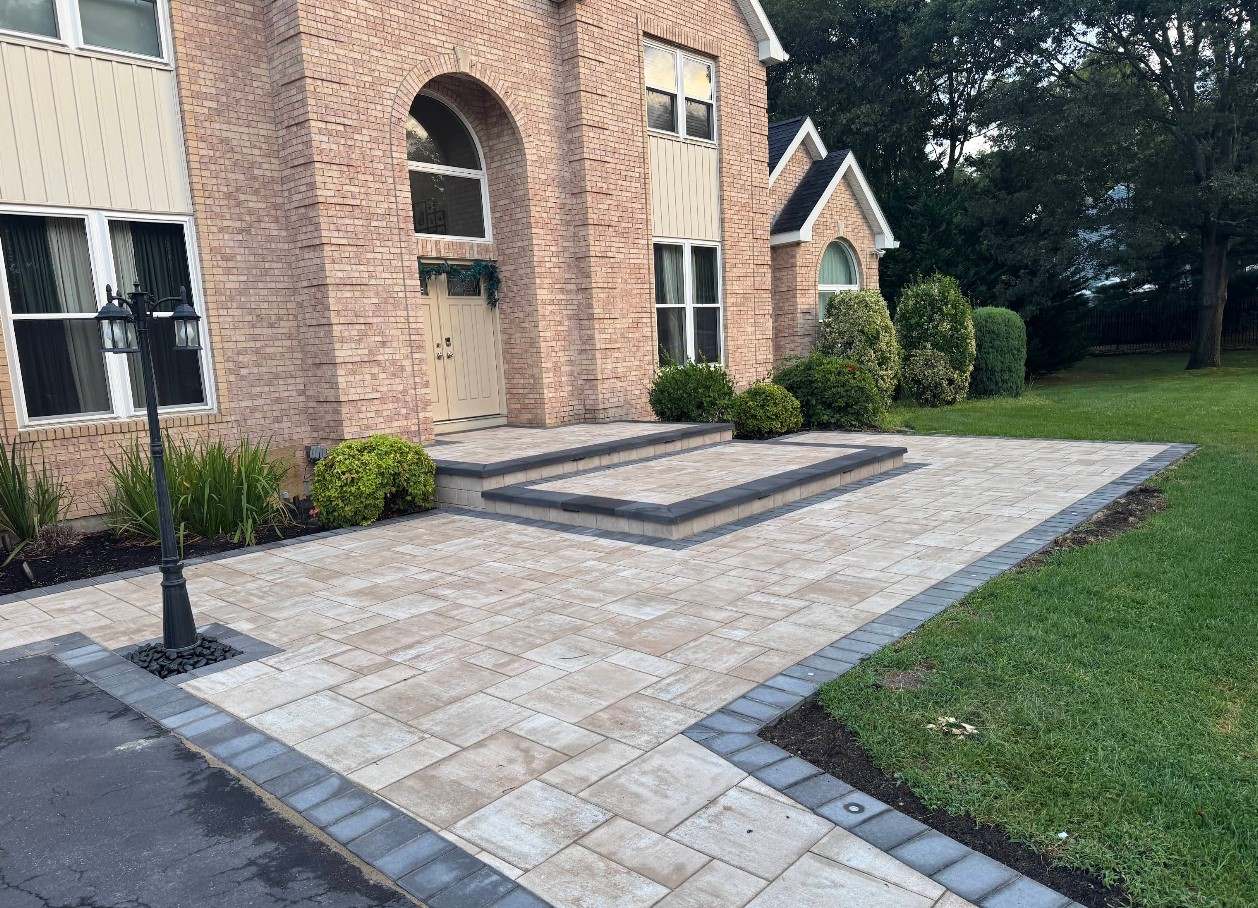
There’s a contractor standing in your yard with a tape measure. This is the fifteen minutes that decides whether the job goes well.
Below is what we’d ask if we were the homeowner, and, because a question list is useless without it, what a good answer sounds like. We’re aware we’re a contractor writing the answers we’d like to be judged on. Ask them of us too.
About the work
1. How deep are you excavating, and what’s the compacted base depth?
Good answer: a number, immediately, and a reason for it: what the ground is, what the surface carries. Bad answer: “we do it properly” or “the standard depth.” There isn’t one standard depth; it depends on the soil and the load. This is the most important question on the list and the one that most reliably separates people.
2. Are you compacting in lifts?
Good answer: yes, with roughly how many passes and at what thickness. Bad answer: a blank look. Aggregate compacted at full depth in one go looks identical on handover day and consolidates unevenly over the following two years. It saves a couple of hours and costs you the job.
3. What edge restraint are you using, and how is it fixed?
Good answer: a specific product, pinned into the base around the full perimeter. Bad answer: “we’ll haunch it with concrete” as an afterthought, or no answer. Segmental paving only interlocks if the perimeter is held. Without it, the outer courses migrate and the field opens up, and there is no repairing a spread patio, only lifting and relaying it.
4. Where is the water going?
Good answer: a direction, a fall, and a destination. Away from the house at roughly a quarter inch per foot, to somewhere specific. If there’s a retaining wall, a drain behind it that daylights somewhere real. Bad answer: “it’ll drain.” Everything drains eventually. The question is where to.
5. What’s under this at the moment, and how do you know?
Good answer: they’ve dug a test hole, or they’ll tell you they’ll find out and that the price may move if the ground isn’t what they expect: with a stated basis for that. Bad answer: certainty without having looked. Ground varies street to street on Long Island; a contractor confident about your subgrade before breaking it is guessing.
About the paperwork
6. What’s the payment schedule?
Good answer: a modest deposit, staged payments tied to completed milestones, and a final balance on completion after you’ve walked it. Bad answer: a large cash sum up front, or anything front-loaded before materials are ordered.
7. What’s the warranty, and on what?
Good answer: a distinction between the workmanship warranty (theirs) and the materials warranty (the manufacturer’s), with terms for both. Bad answer: “fully guaranteed.” Manufacturer warranties on pavers and wall systems are often conditional on how the product was installed, which is why installer recognition matters.
8. Can I see the certificate of insurance, sent from your broker?
Good answer: yes, without friction. Bad answer: a forwarded PDF and reluctance. You want general liability and workers’ compensation, both in date.
About how it will actually go
9. Who’s on site, and will you be one of them?
Good answer: a straight description: crew size, whether the person quoting runs the job, what’s subcontracted and to whom. Bad answer: vagueness. Subcontracting isn’t a problem in itself; not being told is.
10. How long, and what’s weather-dependent?
Good answer: a realistic span with the weather-sensitive parts identified. Asphalt needs warmth to compact to density. Mortar needs temperature to cure. Bad answer: an unqualified date in March.
11. What happens to my driveway, my lawn and my irrigation?
Good answer: they’ve thought about where the machine tracks, where material gets stockpiled, and they’ve asked whether you know where your sprinkler lines run. Bad answer: it hasn’t come up. This is the most common source of a bad-tempered week on an otherwise good job.
One more, and it’s the useful one
Ask them what could go wrong.
It isn’t on the numbered list because it isn’t really a question about the project. It’s a question about the person.
Someone who has built a lot of hardscaping will have an immediate answer, and it will be specific: the ground turning out wetter than expected, a root system nobody could see, a delivery slipping in spring. Someone who says nothing will go wrong has either not done many jobs or isn’t going to tell you when one does.
Comparing the answers
When you’ve asked three contractors, line up the base depths first. If two say six inches and one says three, you are not looking at three quotes for the same job. You’re looking at two quotes and a cheaper thing.
Then compare what’s excluded. The gap between quotes very often lives in the exclusions rather than the prices.
Ask us
We’d rather answer these at an estimate than have you find out later.
Book a free on-site estimate → · Call (631) 245-9273
Related
Hardscaping in Medford · How to choose a contractor · What it costs · The project timeline