
What Happens When Your Driveway Gets Paved
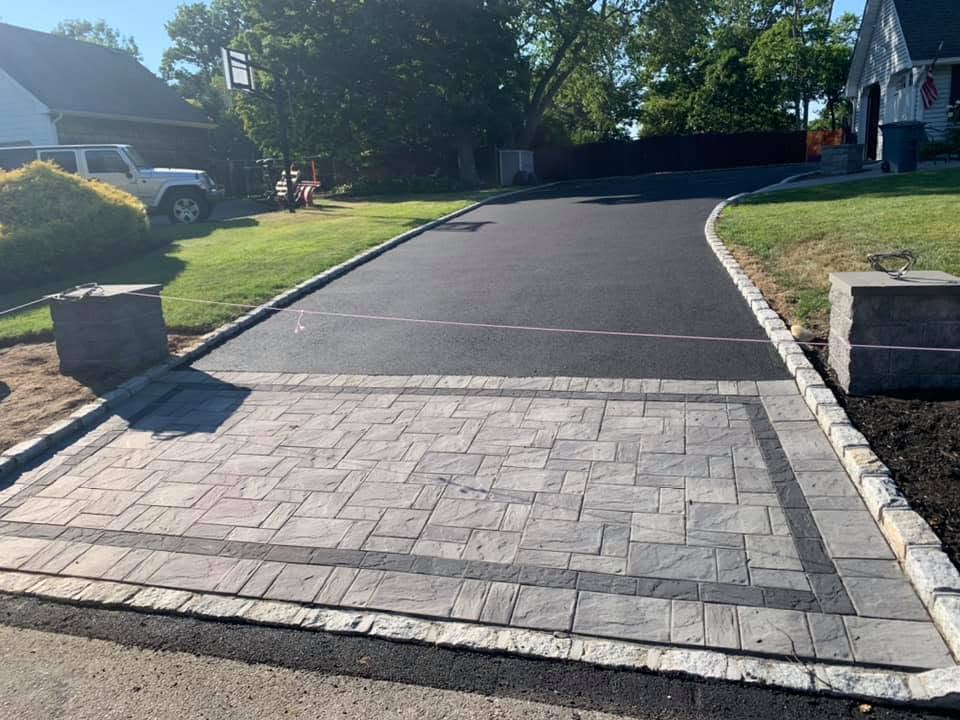
Two days, mostly. Here’s what they look like from your side of the window, and the handful of things worth doing before we arrive.
(This is a typical residential driveway replacement. A larger property, awkward access, or drainage work will run longer. We’ll tell you at the estimate rather than on the morning of day three.)
The week before
Move what you can’t do without. Your cars are the obvious one, and you’ll need somewhere to put them for the whole job plus about 48 hours afterwards. Street parking, a neighbour’s driveway, whatever works: sort it in advance rather than at 7am on the first morning.
Tell us where your irrigation runs. Sprinkler lines are the single most common thing damaged during driveway excavation, and they’re invisible. If you have a plan, share it. If you don’t, walk the line of the drive and point at the heads you can see.
Say where the utilities come in. Gas, water, electric, cable. Anything that crosses under the driveway.
Move anything fragile near the edges. Planters, ornaments, low fencing. Machinery needs room to swing.
Give your neighbours a heads-up. Especially on a tight lot, and especially about noise and where the truck will sit. It costs nothing and prevents the one conversation nobody enjoys.
Ask which days matter. We’ll tell you which day is loudest and which day the drive is completely unusable.
Day one: excavation and base
Early start. We often begin at six. That’s not enthusiasm: asphalt lays better before the day heats up, and starting early means finishing before the afternoon.
The old surface comes out. Machine work, and it’s the loudest part of the whole job. If you work from home, this is the morning to schedule calls elsewhere.
Spoil goes into a truck or a pile. Depending on access and volume. We’ll have agreed which at the estimate.
The subgrade gets cut to depth and compacted. Quieter, and it looks like not much is happening.
This is when surprises appear. A buried slab from a previous driveway, an unmarked line, a root system, ground much wetter than expected. If something changes the job, you’ll hear it the same day and before any extra work is done: not at the end in a revised invoice.
Base goes in. Aggregate placed and compacted in layers, with a plate compactor or roller at each. This is the repetitive, noisy, undramatic part that determines whether the driveway is still flat in ten years.
By the end of day one you have a compacted stone driveway. It will look surprisingly finished and surprisingly grey. That’s correct.
Day two: paving
The truck arrives hot. Asphalt comes from the plant at temperature and it has a working window measured in hours, which is why paving day moves fast once material is on site.
You’ll smell it. Strongly, for a few hours. It’s normal and it dissipates. If anyone in the house is particularly sensitive to it, keep windows on that side shut for the day.
Laying and rolling happen almost together. The mat goes down and the roller follows, because compaction has to happen while the material is still hot enough to move. This is why the crew doesn’t stop for a long lunch on paving day.
Edges get formed and the pitch gets checked. The last details, and the ones worth watching if you’re interested.
It’s finished by mid-afternoon on most residential jobs.
The first 48 hours
Walk on it the same day. Fine.
Keep vehicles off for about 48 hours in warm weather, longer if it’s cool. This is the one instruction that really matters and the one people find hardest, because it looks finished immediately.
Keep off the edges entirely for the first while.
Don’t park a trailer, a bike stand or a ladder on it without a board underneath.
The first summer
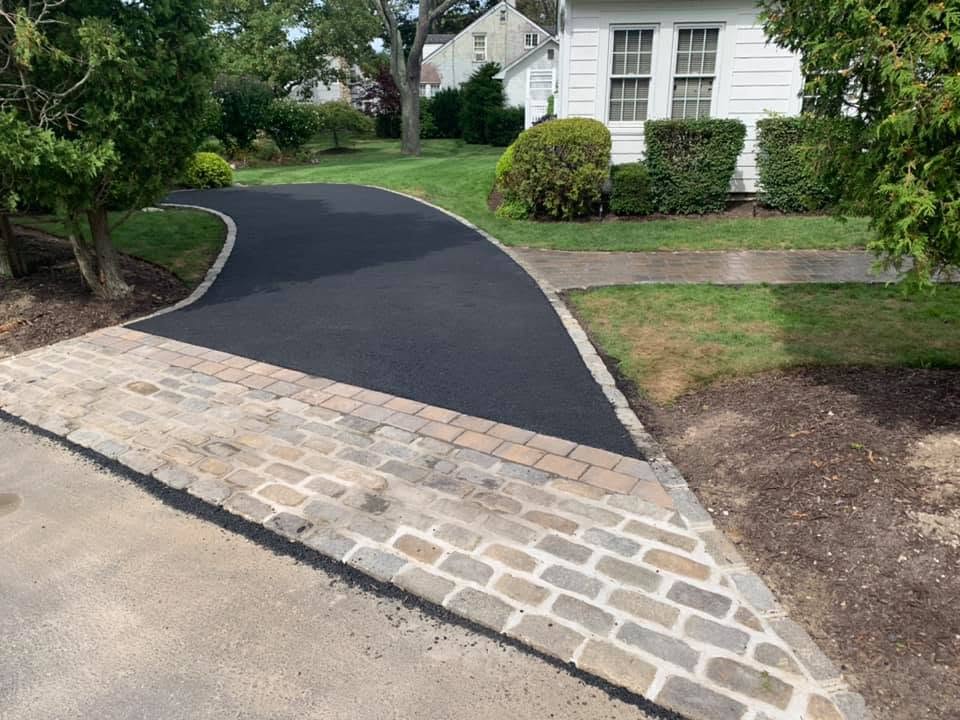
New asphalt keeps curing for months, and it stays soft in the heat while it does.
Don’t turn the wheel while stationary. Power steering on a parked car twists the surface and the scuff is permanent. Roll slightly as you turn: it becomes a habit within a week.
Expect tyre marks in a heatwave. Cosmetic, and it firms up.
Keep heavy vehicles off. A skip lorry or a moving van on a new driveway can do in one visit what years of cars won’t.
Don’t let anyone seal it yet. It needs to cure first. Anyone offering to seal a driveway laid last month is selling you something. More on aftercare and sealing →
Weather, and why dates move
Asphalt needs the ground and the air warm enough for the mat to be compacted to density before it cools. That’s not a preference, it’s the physical limit on the whole trade, and it’s why the season here runs spring through late autumn.
So: rain on the morning of paving day usually moves it. Rain on excavation day sometimes doesn’t. A cold snap in October can. We’d rather move a day than lay material that won’t compact, because the second option is a driveway that ravels at the edges in its first winter and there’s no repairing that afterwards.
Spring books out first. If you want work in May, the conversation happens in February.
Before we leave
We’ll walk it with you. Look at where the water goes: a bucket of water on the surface tells you more than any explanation. Look at the edges and the join at the road.
Then you know what you’ve got, and so do we.
Book a free on-site estimate → · Call (631) 245-9273
Related
Paving contractor in Suffolk County · What’s actually in an asphalt driveway · Driveway aftercare and sealcoating · Resurfacing or replacement?