
Hardscape Contractor in Suffolk County, NY
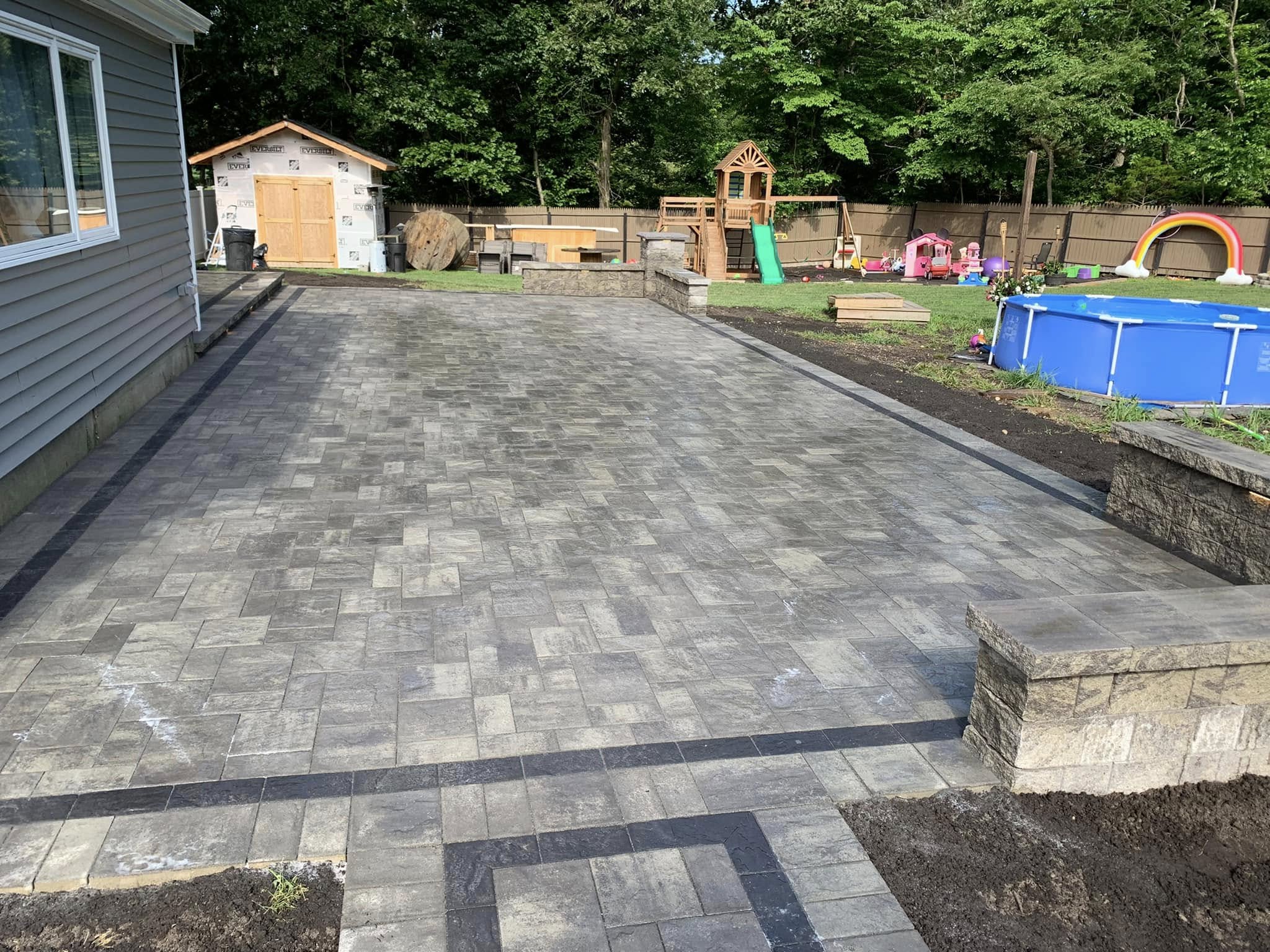
Patios, retaining walls, walkways, steps, fire pits, outdoor kitchens and masonry: built as one project by one crew, across Suffolk County.
Get a free on-site estimate → · Call (631) 245-9273
When it’s a hardscaping job rather than a patio job
If you need a patio, get a patio. Call us and we’ll build one.
Hardscaping is the right word when the problem isn’t one element but the relationship between several, and there are two reliable tells.
A grade change. The back door sits three feet above the lawn, or the yard falls away toward the boundary. Solve that and you need a wall, steps, a level surface and drainage, and every one of those decisions constrains the others.
Water. If the yard floods, ices over in winter or sends runoff toward the house, that’s a site-wide grading question. Building a patio in the middle of it moves the water somewhere else rather than solving it.
Suffolk County is two different design problems
A hardscape contractor who builds the same detail in Huntington as in Islip is going to be wrong in one of them.
Two glacial moraines form Long Island’s spine: the Harbor Hill along the north shore, the older Ronkonkoma through the centre. South of both is the outwash plain: sorted sand and gravel, flat and free-draining.
On the outwash plain, across Medford, Holbrook, Patchogue, Sayville and Islip, water leaves the ground readily, so hydrostatic pressure behind walls builds slowly and patios rarely sit in water. The discipline that matters is compaction, because loose sand consolidates under load without announcing it.
On the moraine, across Huntington, Commack, Setauket, Port Jefferson, Miller Place and Ronkonkoma, the ground is unsorted till that holds water. Frost heave is the failure mode, retaining walls fail from hydrostatic pressure rather than from weak blocks, and drainage stops being a detail and becomes the organising decision of the whole project.
On the coast, across Hampton Bays, free-draining sand plus a high water table near the water, and salt in the air that attacks every metal component in the project.
More on which season suits which work →
Why one project beats three
One excavation. Machinery on site once, spoil removed once, access disrupted once.
One grade. Every element set from the same datum, so the levels resolve. Patios, steps and walkways built in separate years by different crews meet at trip edges and puddles, because each was set from whatever happened to be there at the time.
One base. Continuous under adjoining surfaces, rather than three bases butting together with a settlement joint at every junction.
One drainage plan. Water is a site-wide problem. Solved once, properly, it stays solved. Solved element by element, each fix creates the next problem downhill.
One materials order. Concrete pavers vary between production batches. Bought together they match; bought three years apart they don’t, and there’s nothing to be done about it afterwards.
What we build
Patios · Retaining walls · Paver walkways · Steps and stoops · Fire pits · Outdoor kitchens · Masonry · Chimney repair · Asphalt driveways · Oil and stone chip seal
How a project runs
Site visit. Levels, drainage, access, what’s staying, where the water goes now and where it should.
Design. Layout and materials, with spaces sized against real furniture rather than drawn as rectangles.
Written specification. Excavation depths, base build-ups, materials, square footages, drainage detail, disposal, exclusions, payment schedule. If a quote you’re comparing doesn’t state the base depth, that’s the one to question.
Build, in order: excavation and grading, drainage, structures, surfaces last. Nobody wants a digger crossing a finished patio.
Walk it, on site, together, before the final payment.
What the timeline looks like →
Where we work
Medford · Holbrook · Ronkonkoma · Patchogue · Sayville · Islip · Setauket · Port Jefferson · Miller Place · Commack · Huntington · Hampton Bays
Credentials
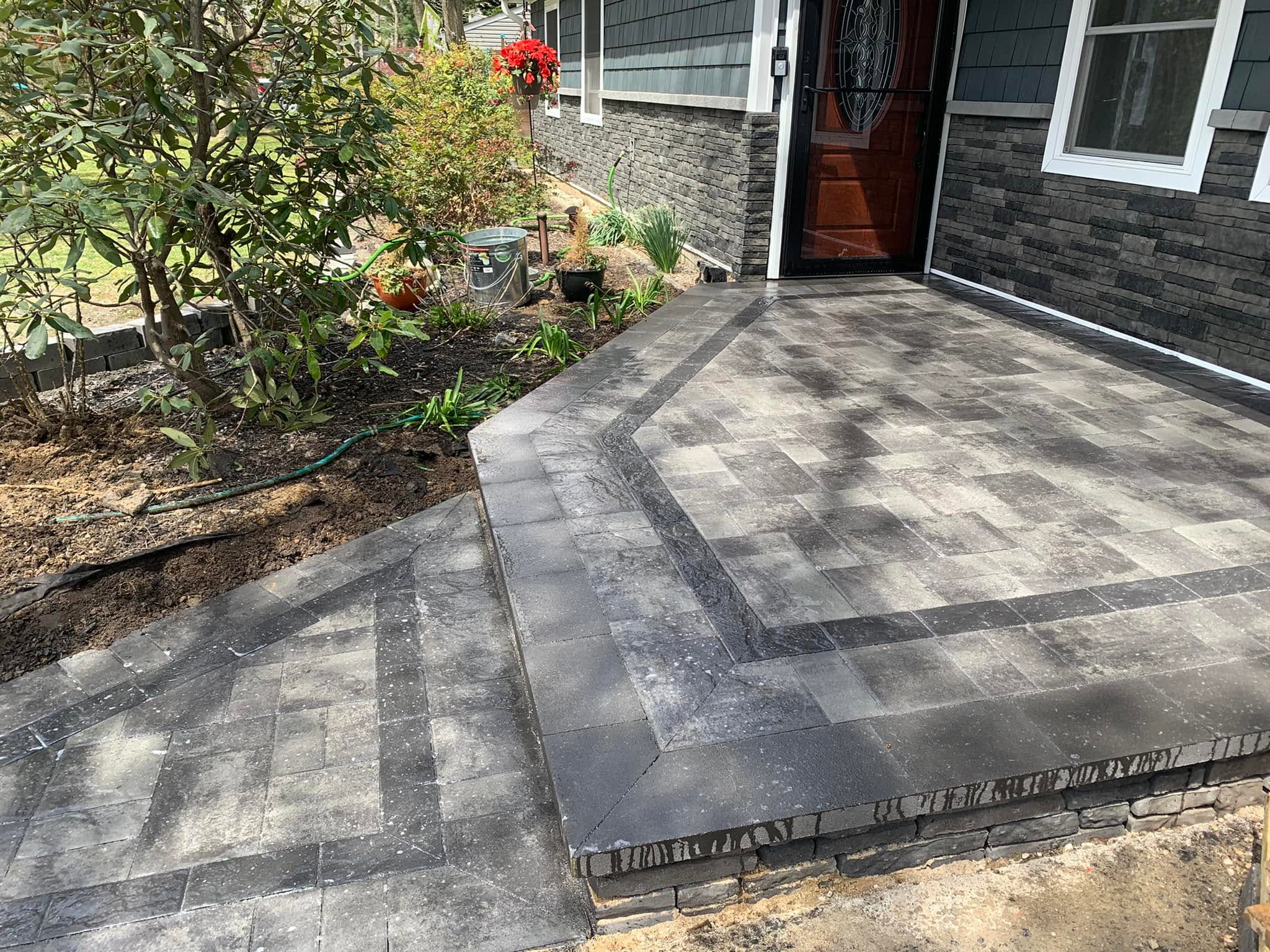
ICPI certified: the Interlocking Concrete Pavement Institute’s installer certification, which examines subgrade preparation, base and bedding, compaction sequence, jointing and edge restraint. In other words, all the parts of a patio you can’t inspect once it’s done.
Techo-Bloc Pro: manufacturer recognition, which matters because material warranties on paver and wall systems are conditional on installation.
A+ with the BBB. Not BBB accredited. That’s a paid membership rather than a rating, and we’d rather say so than let the A+ imply it.
Before you get quotes
How to choose a hardscaping contractor · Twelve questions to ask · What it costs · Contracts and payment terms · Materials compared
Get a price
Book a free on-site estimate → · Call (631) 245-9273
Frequently asked questions
What does hardscaping cost in Suffolk County? It comes down to the size of the job, the material, and the condition of what is already there. We quote on site and the estimate is free, so you get a figure for your property rather than a national average. Book one, or call (631) 245-9273 if you want to talk it through first.
Can a project be phased? Yes, and for budget reasons it’s often sensible. But phase it from a single plan with a single grade agreed at the start. Phasing without a plan is how you end up with three surfaces that don’t meet.
Can you work with a designer’s drawings? Yes. If something won’t work on your ground we’ll say so before quoting rather than build it and let you find out.
What’s the best time of year to start? Spring books out first, so plan in winter. Autumn is underrated: workable ground, looser schedules, and it’s settled for the following summer.