
Masonry Contractor in Suffolk County, NY
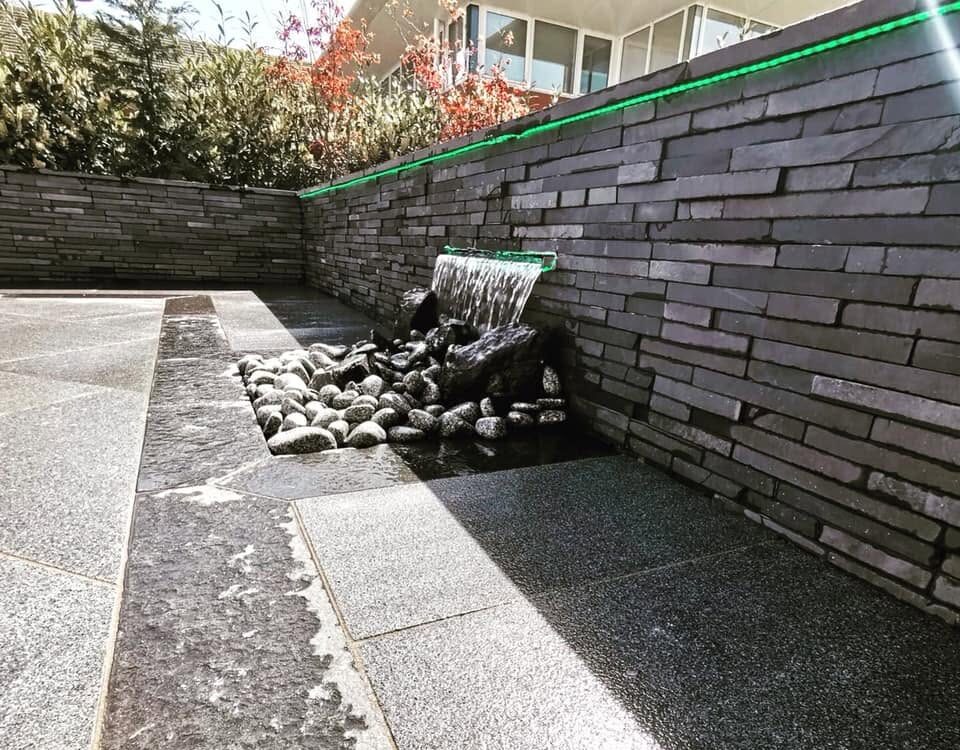
Brick, block and natural stone across Suffolk County: piers, veneer, garden walls, steps, chimneys, and the repointing that keeps all of it standing.
Get a free on-site estimate → · Call (631) 245-9273
Mortar is supposed to be the weak part
This is the single most useful thing to understand about masonry repair, and it’s the reason so much well-intentioned repointing damages houses.
Mortar is sacrificial by design. It absorbs movement, carries moisture out of the masonry, and wears before the brick does, because mortar is cheap to replace and brick is not.
Use a mortar harder than the brick and you invert that relationship. The joint stops giving, so the brick takes the movement instead and the faces start popping off. Water that used to leave through the joint leaves through the brick, taking the face with it when it freezes. On older, softer brick, a modern high-cement mortar can do more damage in a decade than the previous fifty years of weather.
So the first thing we do on a repointing job is look at what’s already there and match to it: strength, colour and joint profile.
Repointing properly means joints cut out to a real depth rather than skimmed over, dust cleaned out, masonry dampened, mortar packed in lifts and tooled to match the original profile. Smearing new mortar over the face of open joints looks finished for about eighteen months.
Reading a crack
Homeowners ask us to quote for cracks constantly, and knowing which ones matter saves money.
Hairline cracks following the mortar joints. Age and weather. Repointing territory, eventually rather than urgently.
Stepped diagonal cracks through the joints, widening toward one end. Differential settlement. Repointing hides it; it reopens in the same line. The cause needs diagnosing first.
Vertical cracks straight through brick faces. The brick is taking movement it shouldn’t be. Often a mortar-too-hard problem, sometimes structural.
Anything that has widened since you last looked. Mark the ends with a pencil and a date. If it grows, you need a structural engineer before you need a mason, and we’ll tell you that rather than repoint a crack that’s going to reopen.
What we build and repair
Piers and columns: gate piers, porch columns, mailbox piers. New builds and rebuilds of ones that have settled or been hit.
Veneer: brick and stone facing to foundations, porches, planters and outdoor kitchen carcasses.
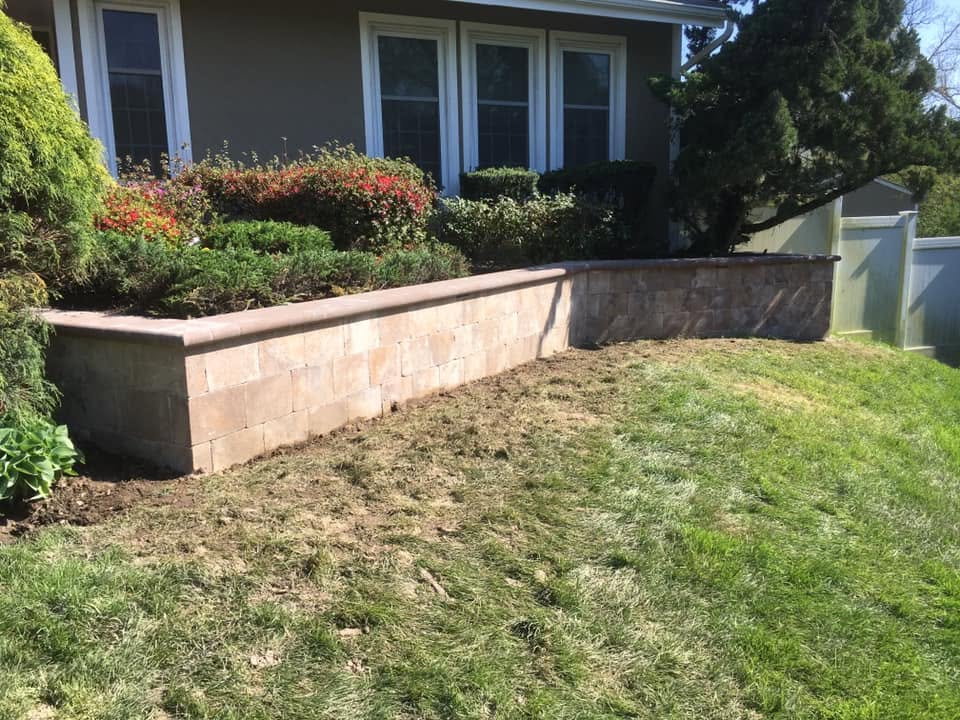
Freestanding garden and seating walls. Both faces visible, no soil behind: a different job from a retaining wall, though people often mean one and say the other. Retaining walls →
Steps and stoops: rebuilds and new construction.
Chimney repair: repointing, crown rebuilds, flashing, brick replacement. The masonry side only; we don’t sweep or line flues.
Repair: cracked joints, spalled brick, settled sections, storm and impact damage.
What we don’t do
Structural foundation work, underpinning, or anything load-bearing to the house needing an engineer’s design. If your masonry problem is a symptom of the building moving, you need a structural engineer first and a mason second.
Flue sweeping, lining and relining. Different trade, different certification.
Suffolk County housing stock
Most of the housing we work on across central and southern Suffolk went up in the post-war decades, which puts a great deal of original mortar at fifty to seventy-five years old: right at the end of its service life.
The pattern is consistent: a house that’s been fine for decades, one hard winter, and suddenly there are open joints, a leaning pier, or damp showing on an interior wall. Nothing changed except that the mortar finally opened enough to let water through.
Older stock around Sayville, Setauket and Port Jefferson is a different proposition: softer brick, older mortar, and the matching question matters much more.
Coastal properties in Hampton Bays get salt on top of freeze-thaw. Salt crystallising inside porous masonry does mechanical damage in much the same way ice does, so coastal masonry needs looking at more often than inland.
Where we work
Medford · Holbrook · Ronkonkoma · Patchogue · Sayville · Islip · Setauket · Port Jefferson · Miller Place · Commack · Huntington · Hampton Bays
Book a free on-site estimate → · More about us →
Frequently asked questions
Will the new mortar match? Brighter at first, weathering in over a season or two. We can tint to get closer, and on a partial repoint that’s usually worth doing so the patch doesn’t read as a patch.
Can you match my existing brick? Close, rarely exact. Production colours shift across decades and the originals have weathered. We’ll bring samples.
Is repointing worth it or should I rebuild? Repointing works when the units are sound and the joints have failed. When brick faces are spalling across an area, or a section has moved, rebuilding is the honest answer.
Do you work in winter? Mortar needs temperatures above a certain point to cure properly. We’ll tell you if a job needs to wait rather than lay mortar that won’t set. Seasonal guide →
What does it cost? It comes down to the work, the access, and how closely the existing masonry has to be matched. We quote on site and the estimate is free, so you get a figure for your property rather than a national average. Book one, or call (631) 245-9273 if you want to talk it through first.