What Is the Best Material for Patio Installation in Suffolk County, NY?

Choosing the right material for patio installation in Suffolk County, NY can affect much more than appearance. The surface you choose can influence durability, maintenance, drainage, repair needs, comfort, and the overall style of your outdoor space.
Suffolk County homeowners also need to think about seasonal weather, freeze-thaw conditions, moisture, and long-term use. Island Driveways & Patios, Inc. helps homeowners create outdoor living areas using materials suited to their property, budget, and design goals.
Which Patio Material Is Best for Suffolk County Homes?
For many Suffolk County homes, interlocking concrete pavers are one of the best all-around patio materials. They offer strong durability, design flexibility, individual-unit repairability, and many color and pattern choices.
However, natural stone, brick, porcelain pavers, and poured concrete can also be excellent choices. The best material depends on your budget, preferred appearance, maintenance expectations, drainage conditions, and how you plan to use the patio.
What Should You Consider When Choosing a Patio Material?
Before comparing individual materials, think about how the patio will function.
Important considerations include:
- Durability
- Maintenance requirements
- Installation cost
- Freeze-thaw performance
- Drainage
- Slip resistance
- Color and style
- Repairability
- Patio size
- Outdoor furniture placement
- Fire pit or outdoor kitchen plans
A patio that works well for a quiet seating area may have different requirements from one designed for regular entertaining.
Why Does Suffolk County’s Climate Matter?
Outdoor hardscaping in Suffolk County experiences changing temperatures, rainfall, freezing conditions, and seasonal moisture.
These conditions can affect patio surfaces and the material underneath them. That is why proper base preparation, grading, and drainage are just as important as the surface material itself.
Are Interlocking Concrete Pavers the Best All-Around Choice?
Interlocking concrete pavers are a popular choice because they balance durability with design flexibility.
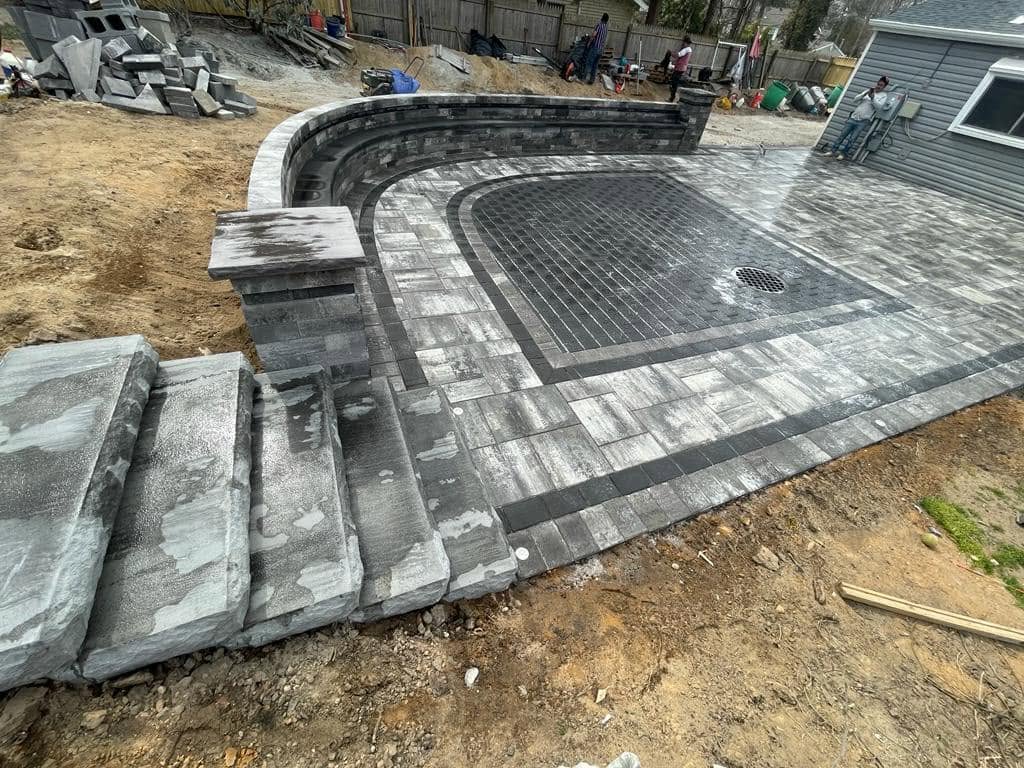
Homeowners can choose from many shapes, textures, sizes, and colors. Pavers can create traditional, rustic, or modern outdoor spaces depending on the selected pattern and border.
Another advantage is repairability. Because the surface is made from individual units, damaged or settled sections can often be addressed without replacing the entire patio.
Are Patio Pavers Easy to Repair?
In many cases, yes.
If a small section settles or individual pavers become damaged, those units can often be removed and reset. This can make localized repairs easier than repairing a continuous poured surface.
Proper installation still matters. Poor base preparation can cause even high-quality pavers to move or settle.
What Styles Are Available With Patio Pavers?
Options may include:
- Large-format pavers
- Stone-look designs
- Traditional rectangular pavers
- Multi-size patterns
- Contrasting borders
- Contemporary geometric layouts
This flexibility makes paver patio installation suitable for many home styles.
Is Poured Concrete a Good Patio Material?
Poured concrete can work well for homeowners who prefer a clean and continuous surface.
It can be shaped around landscaping, seating areas, and other outdoor features. Different finishes can also create different looks.
Common choices include broom finishes, textured concrete, colored concrete, and decorative treatments.
The main consideration is cracking. Concrete naturally moves and shrinks over time, especially during changing weather conditions.
Is Concrete Cheaper Than Patio Pavers?
Sometimes, but not always.
Patio installation cost depends on much more than the surface material. Excavation, site access, drainage, base preparation, demolition, finishing, and patio size can all affect pricing.
A simple concrete patio may cost less than a detailed paver design. However, a complex concrete project may also require significant labor and preparation.
Is Natural Stone a Good Choice for a Suffolk County Patio?
Natural stone is an excellent option for homeowners who want a premium and organic appearance.
Materials such as flagstone can blend naturally with landscaping, gardens, stone walls, and traditional architecture.
Because natural stone varies in shape, texture, and color, every installation can look slightly different.
What Is the Difference Between Flagstone and Patio Pavers?
Flagstone is natural stone with naturally occurring variations.
Manufactured patio pavers are produced in controlled shapes and sizes. They usually provide more predictable dimensions and a wider range of repeatable patterns.
Flagstone often works well for natural or rustic designs, while pavers can suit both traditional and modern properties.
Neither option is automatically better. The right choice depends on appearance, budget, maintenance expectations, and installation conditions.
Is Brick a Good Material for a Patio?
Brick remains a strong option for homeowners who prefer a classic look.
Its warm tones can complement brick homes, traditional architecture, older properties, and garden-style outdoor spaces.
Popular brick patio patterns include:
- Herringbone
- Running bond
- Basket-style layouts
Brick can create a timeless appearance, but proper installation is important. A well-prepared base and properly maintained joints help support long-term performance.
Brick vs Concrete Pavers: Which Is Better?
Brick is often preferred for traditional character.
Concrete pavers usually offer more flexibility in size, texture, color, and contemporary design.
Your choice should reflect the appearance of your home and surrounding hardscaping rather than following a single universal rule.
Are Porcelain Pavers Good for Outdoor Patios?
Porcelain pavers are becoming increasingly popular for modern outdoor spaces.
They can offer a clean appearance, precise edges, low water absorption, and stone-look finishes. Many homeowners also value their relatively low-maintenance surface.
Porcelain can work particularly well around modern homes, outdoor kitchens, and contemporary seating areas.
Porcelain vs Concrete Pavers: Which Should You Choose?
Porcelain is often a good fit for sleek designs and lower-maintenance priorities.
Concrete pavers generally provide more variety in shapes, textures, patterns, and traditional hardscape styles.
The best option depends on the patio’s design and how the area will be used.
Which Patio Material Requires the Least Maintenance?
Porcelain is often considered one of the lower-maintenance patio materials because of its low absorption and stain resistance.
Concrete pavers, brick, stone, and poured concrete also remain manageable with regular cleaning and timely repairs.
No outdoor patio is completely maintenance-free.
Maintenance needs can depend on:
- Drainage
- Tree coverage
- Joint materials
- Sealing
- Weather exposure
- Surface type
- Installation quality
Choosing the right material is only one part of keeping a patio in good condition.
How Important Are Patio Base Preparation and Drainage?
Base preparation and drainage are critical for patio installation in Suffolk County, NY.
Even premium materials can develop problems when the supporting base is poorly prepared.
A professional patio installation may involve excavation, subgrade preparation, compacted aggregate, grading, edge restraints, and careful drainage planning.
What Happens When a Patio Has Poor Drainage?
Poor drainage can contribute to:
- Standing water
- Low areas
- Edge erosion
- Joint deterioration
- Patio movement
- Water flowing toward the house
The patio should be designed so water moves in an appropriate direction.
Why Do Patio Pavers Sink?
Pavers may settle because of poor base compaction, drainage problems, edge movement, or inadequate installation.
The paver itself may not be the real cause.
This is why homeowners should pay as much attention to installation methods as they do to color and design.
How Much Does Patio Material Affect Installation Cost?
Material choice is important, but it is only one part of the total cost.
Other factors can include:
- Patio square footage
- Excavation
- Existing surface removal
- Access to the yard
- Base preparation
- Drainage corrections
- Pattern complexity
- Borders
- Curves
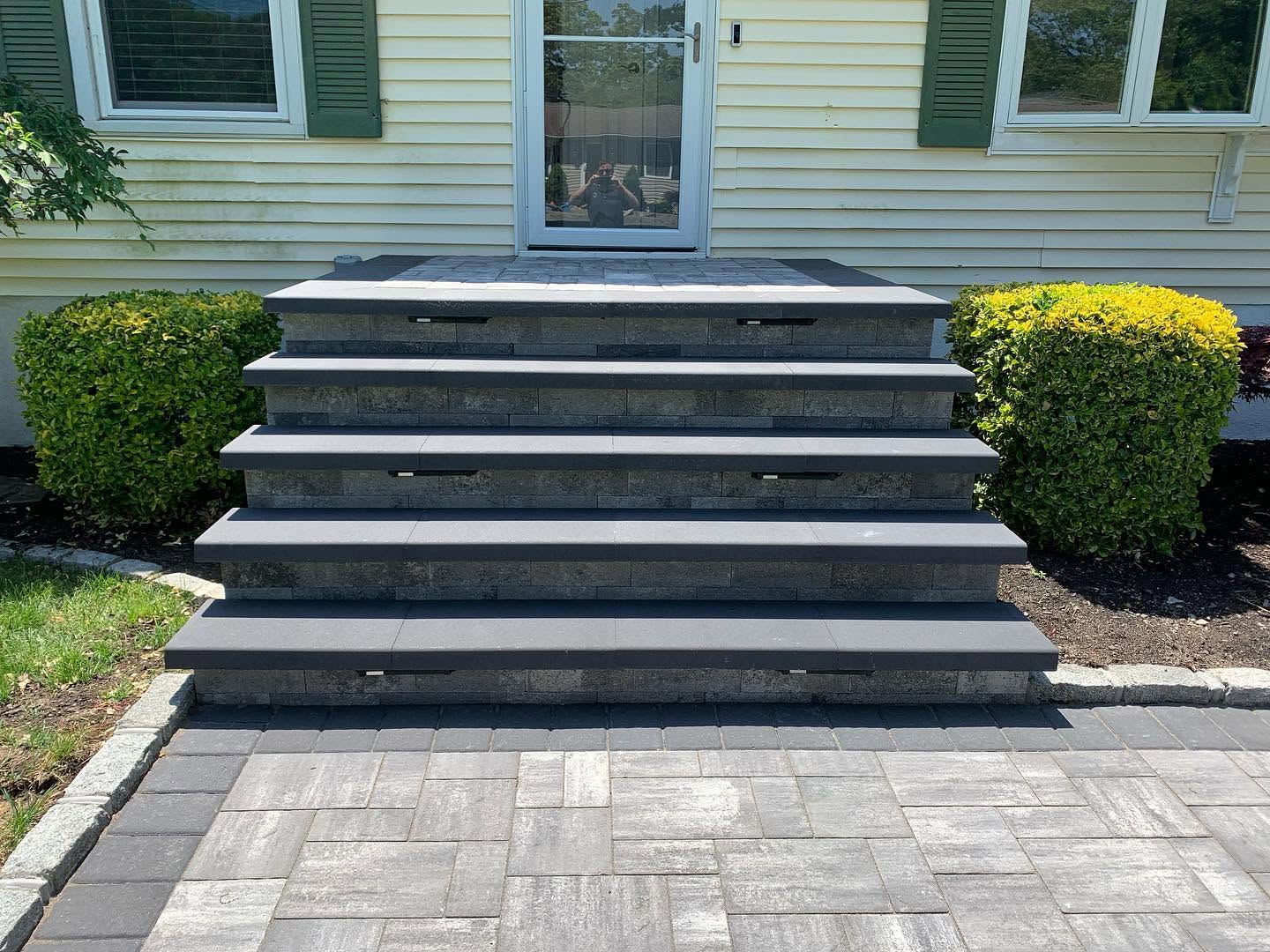
- Steps
- Retaining walls
- Fire pits
- Outdoor kitchens
A smaller patio with difficult access or extensive grading may require more work than a larger patio on a simple site.

How Do You Match Patio Material to Your Home?
The best patio should feel like part of the property rather than a separate addition.
Consider your home’s:
- Siding
- Brickwork
- Stone features
- Roof color
- Walkways
- Driveway
- Landscaping
- Pool area
- Retaining walls
If you are adding an outdoor kitchen or fire pit, those features should also influence material and layout decisions.
Island Driveways & Patios, Inc. can help coordinate patio materials with other hardscaping features for a more unified outdoor design.
Quick Patio Material Comparison
Interlocking Concrete Pavers
Best for design flexibility, repairability, and a wide range of styles.
Poured Concrete
Best for simple continuous surfaces and clean layouts.
Natural Stone
Best for premium, natural, and one-of-a-kind appearance.
Brick
Best for traditional homes and classic outdoor spaces.
Porcelain Pavers
Best for contemporary design and lower-maintenance priorities.
There is no single material that is perfect for every patio. The strongest choice balances climate, drainage, budget, maintenance, and design preferences.
Frequently Asked Questions About Patio Materials
What Is the Most Durable Material for an Outdoor Patio?
Concrete pavers, porcelain, and quality natural stone can all provide strong durability when properly installed. Base preparation, drainage, weather exposure, and maintenance also affect long-term performance.
Are Pavers Better Than Concrete for a Patio?
Pavers offer individual-unit repairability and greater pattern flexibility. Poured concrete provides a continuous surface and different finishing options. The better choice depends on your budget, design, and maintenance priorities.
What Patio Material Is Best for Cold Weather?
Materials designed to handle freeze-thaw exposure are generally preferable. Interlocking concrete pavers are commonly considered a strong option when supported by proper base preparation and drainage.
What Is the Easiest Patio Material to Maintain?
Porcelain pavers are often chosen for lower maintenance. However, any patio surface can require cleaning, joint care, drainage maintenance, or occasional repairs.
How Long Does a Paver Patio Last?
There is no single lifespan for every paver patio. Longevity depends on material quality, installation, base preparation, drainage, traffic, maintenance, and how quickly problems are repaired.
Build the Right Patio With Island Driveways & Patios, Inc.
Choosing the right patio material should be based on more than appearance. Your property’s drainage, layout, outdoor living plans, budget, and maintenance expectations all deserve consideration.
If you are planning a new patio in Suffolk County, Island Driveways & Patios, Inc. can help you compare pavers, stone, and other hardscaping options while considering your property’s design and practical needs.
Island Driveways & Patios, Inc.
- Address: 3502 Horseblock Rd, Medford, NY
- Phone: 631-245-9273
- Email: info@islanddriveway.com
- View Island Driveways & Patios on Maps