
What a Patio Costs on Long Island
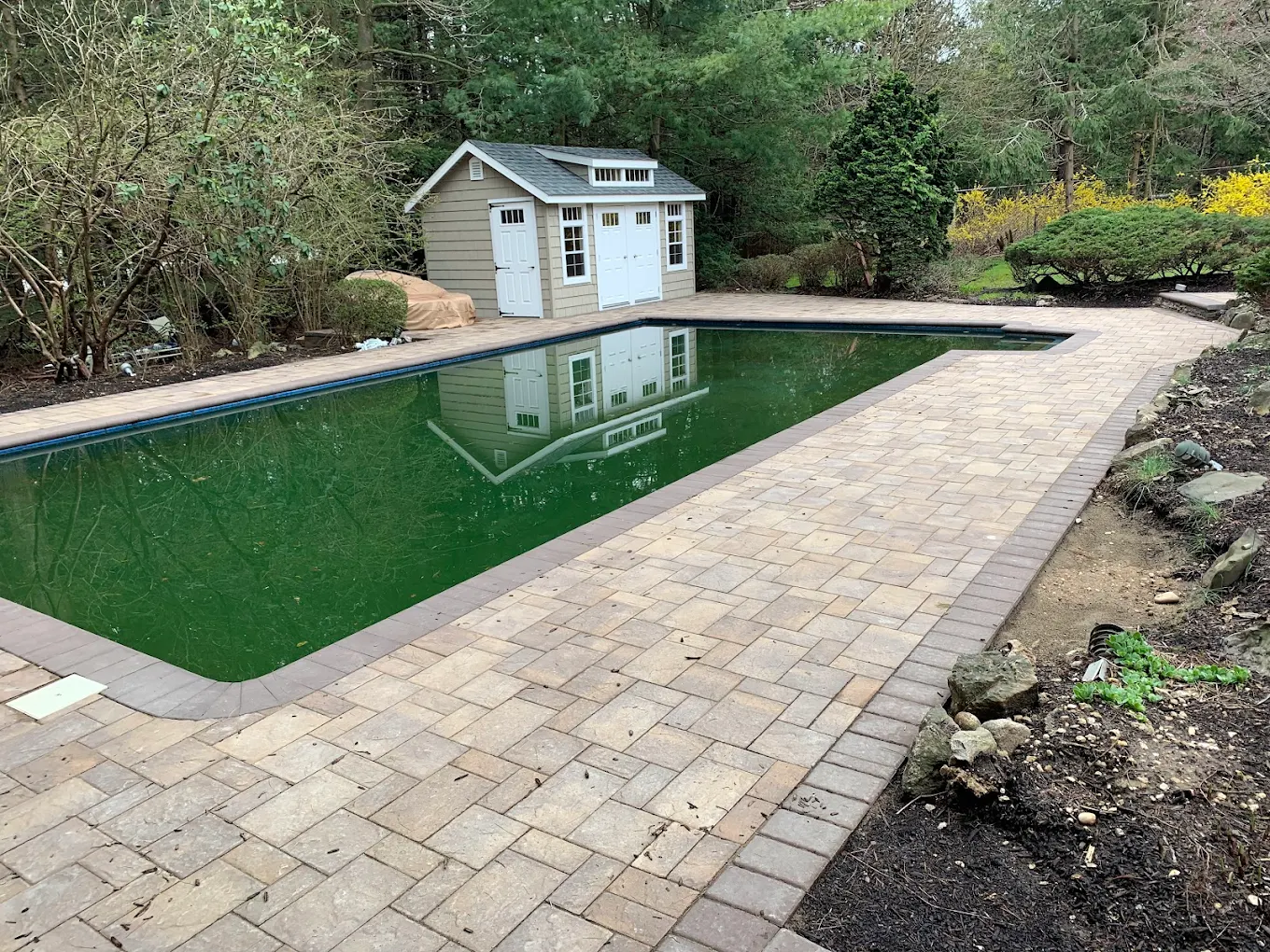
The honest short answer is that the range is very wide, and the material you choose is rarely what decides where you land in it.
Every patio prices differently, so we measure the area and quote on site, and the estimate is free. Book one and we will give you a figure for your property, or call (631) 245-9273 to talk through what you are planning.
Work out your square footage first
Length times width, in feet, and be realistic about the size you actually need rather than the size you first sketched.
That number turns everything below into a real figure. It’s also worth doing before you get quotes, because the most common reason a price surprises people is that the patio they described was considerably larger than the one they pictured.
Size it against your furniture, not against the yard. A dining set needs room to pull chairs fully out and for someone to walk behind a seated person. Add that up and it’s usually bigger than the first sketch, which is exactly why the next section matters.
The single most useful piece of advice on this page
If the number comes back higher than expected, shrink the patio. Don’t economise on the base.
The instinct is the other way round, and it’s wrong every time.
A generously sized patio on a shallow, under-compacted base dishes and opens at the joints within a few years, and fixing it means lifting the lot. A smaller patio built properly is still flat in twenty years and you can extend it later: provided you order the material for the extension now, because concrete pavers vary between production batches.
Cut the footprint. Keep the specification.
What the money is actually buying
People assume the pavers are most of the cost. They usually aren’t.
Excavation and disposal. Real, invisible, and driven by what’s already there. Taking out an old concrete slab costs more than taking out turf.
Base. Aggregate and the labour to place and compact it in lifts. This is the structural part of the patio and a significant share of the number.
Labour to lay. More for intricate patterns, natural stone, and anything with a lot of cuts.
Materials. The part you chose, and often the smallest of the four.
Which is why two quotes for the same patio in the same material can differ substantially. The gap is almost never in the pavers.
What moves the price up
Access. The variable homeowners most consistently underestimate. If a machine can reach the work, one price. If aggregate goes in and spoil comes out by barrow through a narrow side return, a very different one, and it’s labour hours, not a markup. On tight village lots in Patchogue this can be the biggest single factor.
What’s already there. Old slab, old patio, tree roots, buried surprises.
Ground conditions. North-shore moraine till needs drainage design that free-draining south-shore outwash sand doesn’t.
Grade. A sloping yard needs retaining and levelling before a patio can exist. That cost sits in structure, not surface. Retaining walls →
Shape. Curves and irregular outlines mean more cuts and more waste than a rectangle.
Material tier. Real, but usually a smaller swing than the four items above.
Add-ons, and which are worth it
A border. Small cost, disproportionate effect. It absorbs the awkward cuts at the perimeter and frames the whole thing. On anything larger than a small path this is usually the best value addition available. Patterns and borders →
Steps. Priced per riser, and worth doing at the same time as the patio because the levels have to be set anyway.
A seating wall. Doubles as screening and as somewhere to put people when there are more of them than chairs.
A fire pit. Considerably cheaper built into a new patio than retrofitted, because the paving gets laid around it and any gas run goes in before the surface. Fire pits →
Lighting and utility runs. Cheap now as trenches, expensive later as excavation through finished work.
Drainage. Not an add-on. Part of the job, and if a quote doesn’t mention where the water goes, ask. Patio drainage →
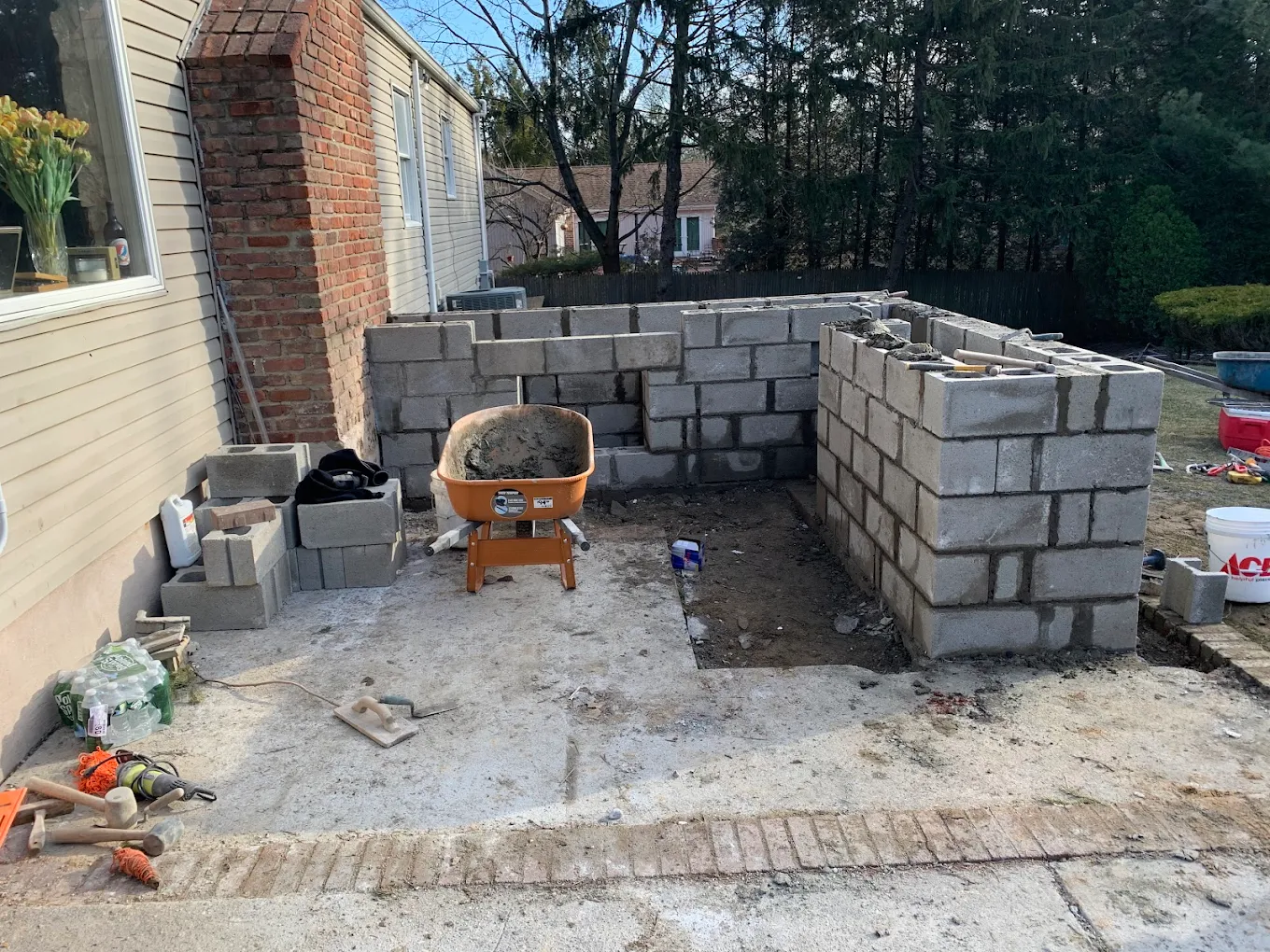
Where a cheap patio quote is cheap
Base depth. Ask every contractor for the compacted depth. Most comparable number on any quote.
Compaction in lifts. Skipped to save hours.
Edge restraint. Omitted or not pinned into the base. Invisible at handover; the patio spreads from the perimeter within two winters and there’s no repair.
Bedding used to level a bad base. Shows within a year.
Disposal. Quoted out, then added.
Ways to genuinely spend less
Phase it from one plan. Wall and grading this year, patio next: designed together, set from one datum, material ordered at once.
Choose one tier down. The tier below premium is usually the value sweet spot.
Simplify the shape. A rectangle with a border beats a curve with none.
Book autumn. Looser schedules, workable ground, settled by summer.
Get a real figure
Book a free on-site estimate → · Call (631) 245-9273
Related
Patio installation in Suffolk County · Design and layout · What a patio is worth · What hardscaping costs